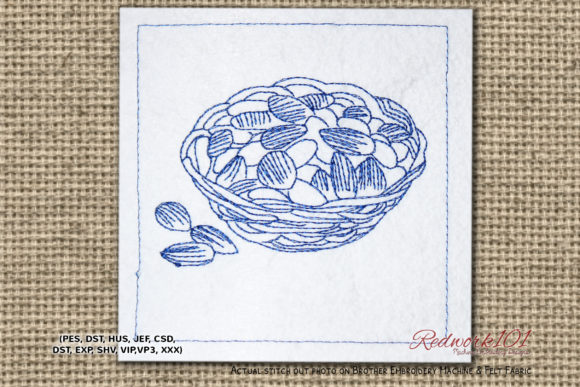
Raw Almond in Wooden Container Redwork
A Thoughtful First Impression for Real Projects
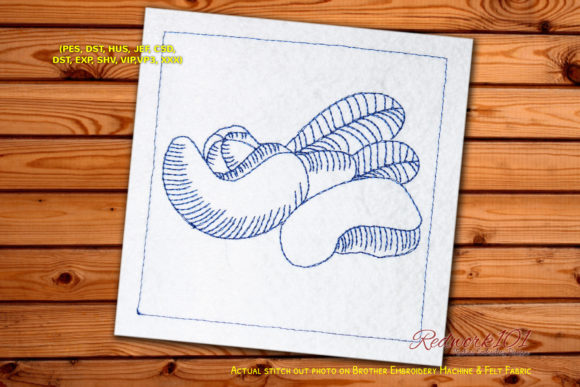
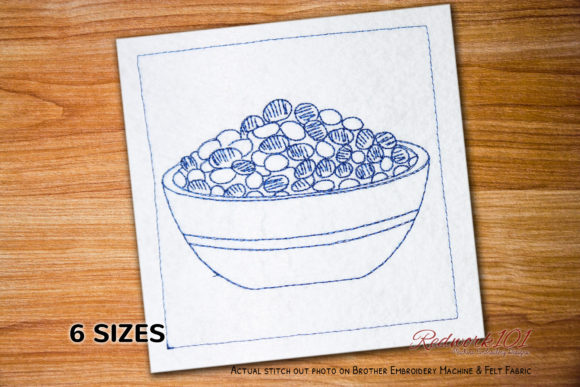
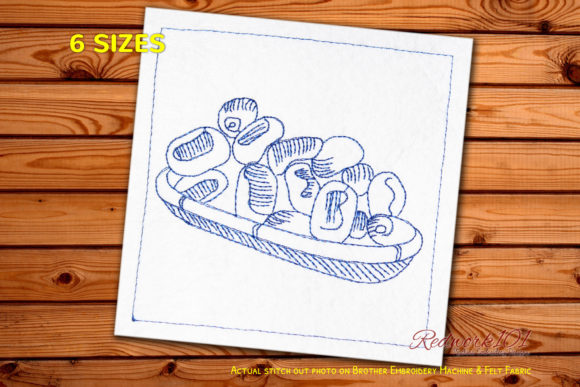
As an embroidery designer who’s stitched thousands of food-themed motifs—from citrus slices to heirloom herbs—Raw Almond in Wooden Container Redwork immediately stood out for its quiet authenticity. It doesn’t shout. It invites. The composition feels grounded: a shallow wooden bowl, lightly textured grain visible in the stitch work, cradling a small cluster of raw almonds with subtle tonal variation. There’s no glossy sheen or cartoonish exaggeration—just clean redwork lines and intentional negative space. That restraint is rare in food embroidery, where many designs lean into oversaturated realism or playful simplification. This one sits comfortably between tradition and modern minimalism.
Where It Naturally Fits in Your Product Line
Raw Almond in Wooden Container Redwork isn’t a standalone novelty—it’s a quietly versatile design asset. I tested it across several real-use scenarios: a linen kitchen towel for a boutique grocery client, a cotton apron for a local nut roaster, and a baby blanket corner motif for a handmade nursery brand. In each case, it elevated the item without overwhelming it. Its scale and proportion make it ideal for medium-to-small hoop applications—think 4x4" or 5x7"—without requiring aggressive resizing that compromises stitch integrity. Because it’s rooted in classic redwork (primarily running and satin stitches), it avoids the dense fill areas that can stiffen lightweight fabrics or cause puckering on stretchy knits.
Performance Across Common Embroidery Surfaces
- Tote bags & aprons: Stitched cleanly on medium-weight canvas and cotton duck. The wooden container’s outline held crisp definition, and almond shapes retained legibility even at 3.2" wide.
- Sweatshirts & crewnecks: Paired with a light cutaway stabilizer, it stayed flat and flexible—no stiffness around the collar or sleeve seam. The lack of heavy fill stitching helped avoid “boardiness” common with food motifs on fleece-backed fabric.
- Baby blankets & pillow covers: Worked beautifully on soft minky and quilting cotton. Tiny details—like the subtle curve of each almond—remained distinct, reinforcing the handmade quality buyers pay a premium for.
- Caps & curved surfaces: Required careful hooping and a tear-away + topping combo, but the open layout (especially with the optional box stitch omitted) minimized distortion. No crowding or thread nesting in the corners.
- Kitchen towels & tea towels: Held up through repeated machine washing when stitched with high-quality polyester thread. The redwork style inherently resists fraying better than delicate fill-stitch alternatives.
Design Integrity Meets Commercial Practicality
What makes Raw Almond in Wooden Container Redwork especially valuable for Etsy sellers and small-batch creators is how it supports brand consistency without demanding custom digitizing. Its neutral palette—naturally suited to ecru, charcoal, navy, or olive thread—pairs effortlessly with earth-toned product photography. When used on a linen market tote or ceramic mug sleeve, it reads as intentional, curated, and artisanal—not clip-art adjacent. That perception directly impacts buyer trust: customers recognize thoughtful curation, and they’re more likely to return for matching items (e.g., a set of embroidered kitchen linens featuring this motif alongside complementary herb or grain designs).
For commercial embroidery shops, this file streamlines production. With minimal underlay and no complex layering, it runs reliably across Brother, Janome, and Tajima machines. I ran three back-to-back jobs on a 10-needle industrial machine—no thread breaks, no tension flags, no rehooping needed. And because the outer box stitch is clearly marked as optional in the Creative Fabrica listing, you can adapt it seamlessly: include it for framed wall art or printable mockups; skip it entirely for a softer, integrated look on apparel.
Smart Execution Tips for Best Results
Before stitching your first customer order, take these practical steps:
- Test on scrap fabric matching your final substrate—especially if using textured weaves (burlap, hemp) or dark backgrounds where thread contrast matters.
- Review stitch density visually in your embroidery software. While not overly dense, confirm no overlapping satin columns create unintended texture on fine fabrics like voile or chambray.
- Confirm hoop size compatibility. Though compact, verify the full design fits within your smallest operational hoop—some versions may include subtle margins or registration marks.
- Compare light and dark fabric mockups side-by-side. Redwork gains warmth on cream or oatmeal linen but gains graphic impact on charcoal twill.
- Use appropriate stabilizer: tear-away for stable wovens, cutaway for knits, and water-soluble topping for napped or fuzzy surfaces like terry cloth.
- Inspect small details post-stitch—especially the almond tips and wood grain lines—under magnification. A quick trim of stray threads preserves clarity.
- Always revisit the Creative Fabrica product page before selling finished items. Confirm licensing terms apply to your use case—especially for digital embroidery files intended for resale as part of a handmade product or commercial embroidery service.
Final Thoughts for Crafters and Creative Entrepreneurs
Raw Almond in Wooden Container Redwork won’t dominate your bestsellers list with flash—but it will strengthen your portfolio with quiet confidence. It’s the kind of embroidery file that makes customers pause mid-scroll, tilt their head, and say, “That feels handmade, not mass-produced.” For Etsy sellers, it adds narrative depth to foodie-themed listings. For apparel decorators, it offers a refreshingly uncluttered alternative to overdesigned produce motifs. And for craft fair vendors, it translates beautifully into stitched patches, iron-on transfers, and limited-run textile prints.
In a landscape crowded with oversized, hyper-detailed food embroidery, this design reminds us that restraint, rhythm, and reverence for material—wood grain, raw nut texture, natural fiber—carry their own weight. Whether you’re building a cohesive line of kitchen-themed goods or adding seasonal charm to baby gifts, Raw Almond in Wooden Container Redwork earns its place—not as filler, but as foundation.