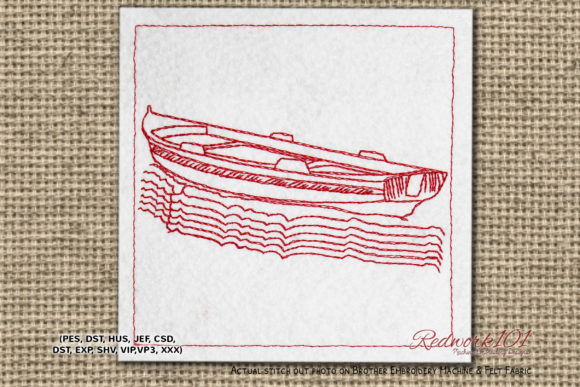
Empty Boat Bluework: A Beach-Themed Embroidery Review
First Impressions: Quiet Charm Meets Coastal Clarity
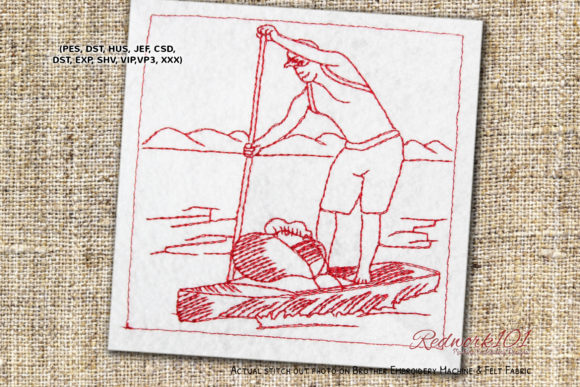
As an embroidery designer who’s stitched hundreds of boutique apparel collections—from linen tees for coastal boutiques to heavyweight hoodies for seasonal drops—Empty Boat Bluework landed with a gentle but confident presence. It’s not loud or trend-chasing; instead, it carries the calm precision of bluework—a style rooted in traditional hand-embroidery discipline, translated cleanly into machine embroidery. The design reads as minimalist yet intentional: clean lines, balanced negative space, and subtle nautical suggestion without cliché anchors or seashells. It feels premium, quietly feminine, and effortlessly versatile—ideal for brands building identity through restraint and texture rather than saturation.
Sweatshirt & Hoodie Performance: Where Simplicity Shines
Empty Boat Bluework excels on neutral sweatshirts—think heather grey, oatmeal, or soft black. Its low-to-moderate stitch density avoids stiffness, letting the fabric drape naturally while holding crisp definition. On chest placement (standard 3–4" width), it reads clearly without overwhelming the garment’s silhouette. For oversized hoodies, consider scaling up slightly—but only if your machine and stabilizer support it without distortion. Sleeve accents work beautifully at 2–2.5", especially on pastel hoodies where the bluework’s tonal subtlety adds quiet sophistication.
The optional Box Stitch border is worth noting: it’s visually grounding, but not essential. Most designs use a contrasting outer box color—unless it’s integrated into the motif itself. You can skip that color pass entirely in your embroidery software, giving you full control over contrast and mood. That flexibility makes Empty Boat Bluework unusually adaptable across fabric tones and brand palettes.
Beyond Sweatshirts: Versatility Across Boutique Apparel
- T-shirts: Performs well on midweight cotton and tri-blends when paired with lightweight cutaway stabilizer. Avoid ultra-thin jersey unless tested first—the design’s line integrity relies on moderate tension control.
- Denim jackets: A standout choice for back yoke or chest placement. The clean geometry complements denim’s texture without competing. Use matte thread for a tactile, artisanal finish.
- Tote bags & lifestyle merch: Holds up beautifully on canvas and heavy cotton duck. The balanced proportions scale well to larger hoops, and the minimal detail ensures legibility even at 5–6" widths.
- Cozy seasonal layers: Works on fleece-lined hoodies and brushed sweatshirting—but test stabilizer pairing carefully. A medium-weight tear-away + light cutaway hybrid often prevents puckering around denser sections.
Placement & Fabric Considerations: Design Intelligence Matters
While Empty Boat Bluework is forgiving, thoughtful execution elevates it from “nice” to “uniquely ownable.” On ribbed fabric (like textured sweater knits), avoid placing directly over high-relief ribs—opt for flat panels like upper chest or back yoke. Curved surfaces (e.g., sleeve caps or curved hems) benefit from slight digitizing tweaks—many Creative Fabrica embroidery files allow minor repositioning in editing software, preserving flow.
For dark garments, choose thread colors with enough contrast to preserve line clarity—navy on charcoal works; pale sky blue may disappear. Tiny lettering isn’t part of this design, so no concerns there—but always inspect stitch density in tight corners before mass production. If your version includes the Box Stitch, confirm whether its density aligns with your fabric’s tolerance—especially on stretchy knits.
Brand Impact: More Than Just a Design
In today’s saturated handmade market, consistency and quiet confidence build buyer trust faster than novelty. Empty Boat Bluework supports that. It reinforces a boutique brand’s aesthetic without shouting—making it ideal for cohesive capsule collections. When used across sweatshirts, tote bags, and denim jackets, it creates visual rhythm in lifestyle product photos and printable mockups. Customers begin recognizing the motif—not as a logo, but as a signature touch. That recognition builds equity, especially for Etsy sellers and small shop owners cultivating repeat buyers.
It also signals craftsmanship: bluework implies attention to line quality, stitch alignment, and fabric respect. That perception lifts perceived value—even on mid-tier apparel. Pair it with thoughtful thread selection and precise hooping, and your finished product communicates care before a single word is read.
Practical Designer Notes Before You Stitch
- Test on scrap fabric—especially if using fleece, ribbed knit, or dark apparel. Note how the Box Stitch behaves under tension.
- Confirm stabilizer choice: Lightweight cutaway for stable knits; tear-away + light cutaway for fleece or stretchy blends.
- Review thread color contrast against your base fabric—not just on screen. Natural light reveals true legibility.
- Check hoop size requirements in the Creative Fabrica embroidery file details. Don’t assume compatibility—verify before prepping production.
- Inspect stitch density in dense zones (e.g., boat outline or inner box edges). Adjust underlay if needed for smoother coverage on textured fabric.
- Test on actual garment fabric—not just swatches. Garment construction (seams, darts, seams) affects final appearance.
- Compare placement options on mockups: chest, sleeve, back yoke, or bag center. One location may resonate more with your audience.
- Review Creative Fabrica licensing terms before selling finished apparel—especially for commercial embroidery products or digital embroidery file resale.
Final Thought: A Thoughtful Tool for Intentional Brands
Empty Boat Bluework isn’t flashy—and that’s precisely why it works. In a landscape crowded with maximalist motifs and algorithm-driven trends, it offers breathing room, coastal serenity, and professional polish. Whether you’re launching a small batch of sweatshirts for a seaside pop-up or building a year-round boutique brand rooted in texture and tone, this Creative Fabrica embroidery file delivers quiet strength. It doesn’t demand attention—it earns it, stitch by careful stitch.