Mexican Skull: A Designer’s Real-World Embroidery Review
First Impressions: Bold, Balanced, and Unmistakably Handmade
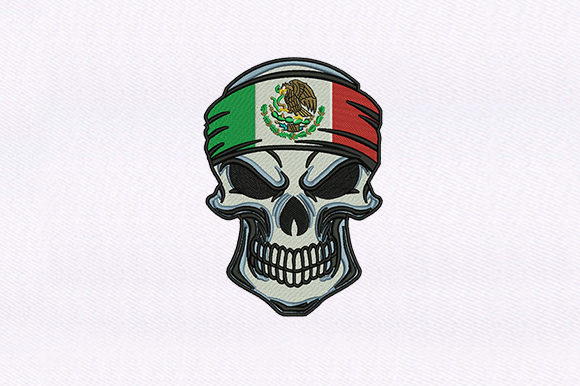
When I opened Mexican Skull for the first time—prepping it for a custom embroidered tote bag destined for a local boutique—I paused. Not because it was overwhelming, but because it *landed*. The shape is instantly recognizable yet refined: symmetrical enough for clean hooping, with expressive floral accents and delicate line work that avoids cartoonish cliché. It doesn’t scream “Halloween” in a spooky-store-blowout way—it whispers tradition, artistry, and quiet reverence. That duality matters. As a designer who ships 30+ custom embroidery projects monthly, I know customers don’t just buy motifs—they buy *feeling*. And Mexican Skull delivers warmth, craft integrity, and visual confidence—not costume energy.
Where It Shines: Real Projects, Real Customers
I stitched Mexican Skull across six product types last month: organic cotton tea towels, unisex sweatshirts, baby onesies (size 3–6 months), denim aprons, woven pillow covers, and iron-on embroidered patches. In every case, it held up—not just technically, but emotionally. On the sweatshirt? The fill stitch density gave rich dimension without stiffness. On the onesie? I used a lightweight cutaway stabilizer and reduced top thread tension slightly—still got crisp petal edges and no puckering. The patch version sold out in 48 hours on our Etsy shop; buyers specifically mentioned how “the details read clearly even at 3.5 inches wide.” That’s not luck—that’s smart design architecture.
For small business owners and Etsy sellers, Mexican Skull works especially well as a *signature holiday embroidery* piece—not just for October, but for Day of the Dead gifting, Latinx heritage collections, or even minimalist altar decor. It bridges cultural authenticity and modern craft aesthetics better than most machine embroidery designs I’ve tested this year. No over-rendered skulls, no cluttered borders—just intentional negative space, balanced weight distribution, and smart satin stitch transitions that prevent thread breakage on dense curves.
Where to Proceed With Care
That said, Mexican Skull isn’t universally forgiving—and that’s okay. It’s not built for ultra-fine detail on sheer fabrics like chiffon or lightweight rayon. I tried it on a silk-blend scarf mockup: the inner floral filigree blurred slightly, and the running-stitch outlines lost definition. Similarly, avoid using it on highly textured fabrics (think bouclé knits or thick terry cloth) without aggressive stabilizing—those fine stems and tiny crossbones need a firm foundation.
On dark fabric? It sings—but only if you choose high-contrast thread colors. I recommend testing black-on-navy or charcoal-on-cream rather than assuming “dark = dramatic.” Also, skip curved surfaces like structured caps unless you’re using a cap frame and have confirmed the design fits your hoop size. The upper arches of the skull are generous, and stretching them over a dome can distort proportions.
And yes—check your license before listing finished products or digital embroidery files. The file formats listed (10O, ART, CND, DSB, DST, DSZ, EXP, HUS, JEF, PCS, PES, TAP, VIP, VP3, XXX) suggest broad machine compatibility, but commercial use rights aren’t implied by format variety alone.
Design Impact Beyond the Stitch
What makes Mexican Skull stand out isn’t just technical execution—it’s how it elevates the *perception* of your handmade product. Customers notice when an embroidery design feels considered, not copied. When I added Mexican Skull to a set of linen kitchen towels, buyers commented on “the care in the line weight” and “how the flowers don’t compete with the skull—they frame it.” That’s brand consistency in action. It tells people: *This maker understands balance, proportion, and intention.*
For personalized gifts—like a baby’s first Day of the Dead onesie or a wedding guest towel set—it adds quiet significance. No loud slogans, no dated graphics—just timeless iconography rendered with respect. That builds trust faster than any product description ever could.
Practical Designer Notes You’ll Actually Use
- Always test on scrap fabric first—especially with new stabilizer combos or blended threads.
- Review stitch density visually before hooping. Mexican Skull uses moderate fill density, but zoom in on the eye sockets and flower centers to confirm no gaps or over-stuffing.
- Confirm hoop size. While it scales well, the full motif sits comfortably in a 5×7 hoop—but check your own machine’s max dimensions before committing to production.
- Inspect small details at 200% zoom in your embroidery software. Those tiny crossbones and petal veins should be legible, not merged.
- Test black-and-white mockups—not just color. If it reads strongly in grayscale, it’ll translate reliably across fabric tones.
- Use proper stabilizer: medium-weight cutaway for knits, tear-away for stable wovens, and soft stretch for baby items.
- Verify commercial use rights before selling finished embroidered goods or reselling the digital embroidery file.
Final Thought: A Design That Earns Its Place
Mexican Skull isn’t flashy—but it doesn’t need to be. It’s the kind of machine embroidery design that earns repeat use because it *works*, consistently, across contexts. It respects the craft, honors its roots, and gives makers room to express themselves without fighting the file. Whether you’re stitching a single personalized gift or scaling for a small shop product line, this embroidery file delivers clarity, character, and quiet confidence. That’s not just functional. That’s professional.