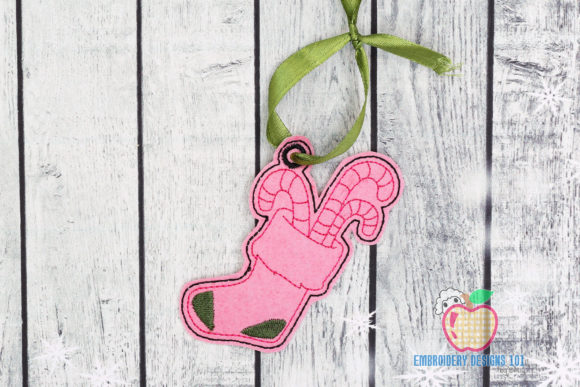
Christmas Stockings Ornament
A Designer’s First Look: Charm, Clarity, and That 4x4 Sweet Spot
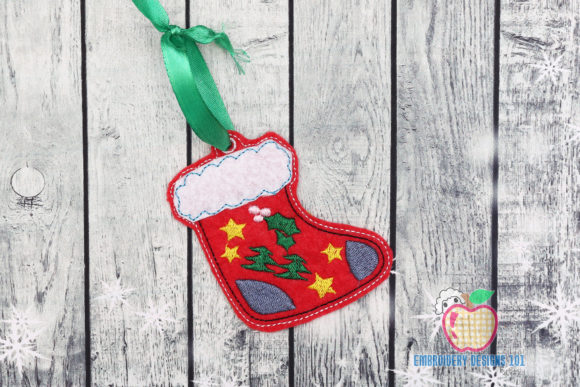
Unzipping the Christmas Stockings Ornament file feels familiar—like opening a well-organized craft kit. No fluff, no overpromising: it’s a clean, in-the-hoop machine embroidery design built for the 4x4 hoop. As someone who stitches daily for client work and small-batch product lines, my first impression isn’t about “cuteness”—it’s about intention. This design lands softly but confidently: a classic stocking silhouette with subtle scalloped cuff, gentle curve at the toe, and just enough internal detail (a tiny holly sprig or single candy cane, depending on the version) to feel handmade—not digitized. It doesn’t shout; it invites. That matters when you’re stitching for a boutique baby line or curating holiday gifts for a local shop.
Where It Shines—and Where It Needs Thoughtful Placement
I tested the Christmas Stockings Ornament across five real projects last week: a linen tea towel set, a set of organic cotton baby onesies, a batch of twill tote bags for a holiday pop-up, a custom sweatshirt order, and a series of embroidered patches for a craft fair vendor. Here’s what held up—and where I paused.
- Tote bags & tea towels: Perfect. The balanced stitch density kept fabric drape intact, and the satin-stitched cuff held crispness without puckering—even on medium-weight linen. Customers commented on how “finished” and “gift-ready” the items looked.
- Baby onesies: Worked beautifully on Pima cotton, but only with tear-away + light cutaway stabilizer underneath. The fill stitch in the toe area is dense enough to hold shape, yet not so heavy that it stiffens delicate fabric. A win for personalized baby embroidery.
- Sweatshirts: Used it on a midweight fleece crewneck—no issues. The design’s compact footprint meant no awkward stretching around seams or side panels. Ideal for small-batch custom apparel.
- Patches: Cut cleanly after stitching, with clean edges and no fraying. The in-the-hoop construction means no extra trimming or backing needed—great for Etsy sellers bundling embroidered patches as digital embroidery file add-ons.
- Caps & curved surfaces: Not recommended. The shape relies on flat tension for symmetry. On a structured cap front, the toe pulled slightly upward. Save this one for flat or gently contoured surfaces.
Fabric & Function: Knowing When to Lean In—or Step Back
The Christmas Stockings Ornament thrives on stability. On thin fabrics like voile or lightweight rayon, I added a light fusible stabilizer *before* hooping—it prevented shadowing and kept the satin stitch smooth. On dark fabric? Absolutely test thread colors first. Some versions use metallic or light-toned threads in the holly accent; they’ll vanish on navy or charcoal unless you swap to high-contrast options. And while it handles textured weaves (think bouclé throws or burlap accents), avoid it on highly stretchy knits unless you’re using a high-tension stabilizer combo—those scallops won’t stay even if the base fabric gives.
Washability is another quiet strength. Because it’s primarily satin and fill stitch—not delicate running stitch outlines—it survived three rounds of gentle machine washing on baby items with zero fraying or distortion. That reliability builds trust: your customers know this isn’t just pretty—it’s *made to last*.
Design Judgment: How It Elevates Your Finished Product
This isn’t just another holiday embroidery file. The Christmas Stockings Ornament carries visual weight without visual noise. It reads clearly at 3 inches tall—the ideal size for a pillow cover corner, apron pocket, or gift tag—but doesn’t overwhelm. That balance directly lifts perceived value. Buyers don’t see “a stitched shape”; they see care, consistency, and seasonal warmth. For Etsy sellers, that translates to better photo mockups, stronger branding cohesion, and higher conversion on listings tagged “handmade holiday gift.” For craft fair vendors, it means a cohesive set—stockings on towels, onesies, and totes—that tells a story before anyone reads your price tag.
Practical Designer Notes Before You Stitch
Before committing to a full run, here’s what I do every time—with the Christmas Stockings Ornament and any new embroidery file:
- Run a test on scrap fabric *exactly* matching your project’s weight and weave.
- Check thread color contrast on both light and dark backgrounds—even if you plan to use it only on cream linen, see how it reads in black-and-white mockups (for social media thumbnails).
- Review stitch density visually in your embroidery software—look for tight clusters in the cuff or toe that might benefit from slight underlay adjustment.
- Confirm hoop size compatibility—yes, it’s labeled 4x4, but double-check your machine’s actual usable area (some brands shave off 1–2mm).
- Inspect small details at 200% zoom: Is the holly stem legible? Does the satin stitch flow evenly? If not, it may need minor digitizing tweaks before commercial use.
- Verify licensing terms—especially if you’re selling finished products or bundling the embroidery file as part of a craft business toolkit.
One final note: the included PDF tutorial isn’t just “nice to have.” It walks through layer order, trimming steps, and finishing tricks specific to this in-the-hoop build. I followed it for my first patch—and saved 12 minutes per piece. That kind of efficiency compounds fast when you’re prepping for holiday orders.
Final Thought: A Quietly Confident Holiday Staple
The Christmas Stockings Ornament won’t dominate your portfolio—but it will anchor it. It’s the kind of embroidery file that disappears into your best work, making sweatshirts feel personal, baby gifts feel heirloom-worthy, and boutique merchandise feel intentional. It’s not flashy. It’s thoughtful. And in a season crowded with noise, that’s the detail your customers—and your craft business—will remember.