Sassy Prim Tree
First Impressions: Whimsy with a Wink
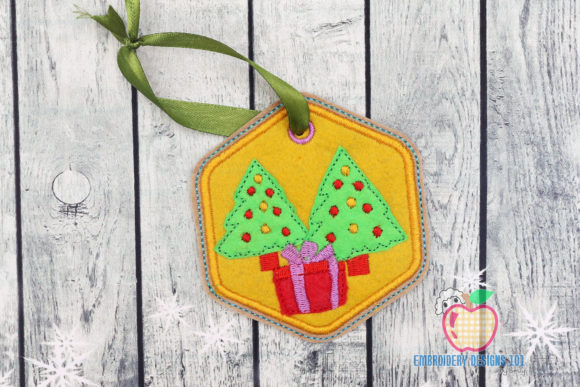
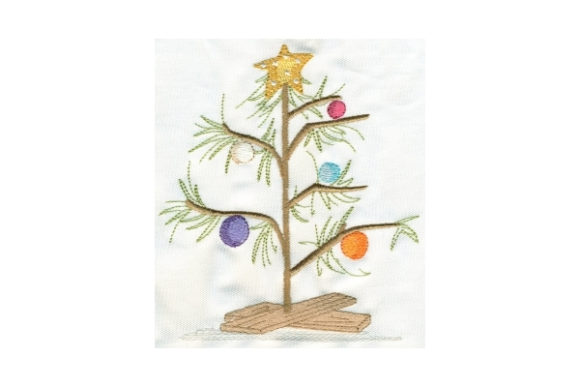
Opening the Sassy Prim Tree embroidery file feels like unboxing a well-curated holiday card—charming, intentional, and just a little cheeky. It’s not overly fussy, but it’s not minimalist either. The tree shape is balanced and slightly stylized, with clean outlines and subtle flourishes in the branches that suggest movement without sacrificing stitch stability. There’s a gentle primness in the symmetry, but the “sassy” comes through in the confident spacing, the playful curve of the trunk, and how the design invites personality—not just decoration. This isn’t a background filler; it’s a statement piece meant to anchor a handmade product with warmth and wit.
Real-Life Test: A Holiday Tote Bag for My Local Boutique
Last week, I prepped a batch of canvas tote bags for a small-town gift shop’s Christmas launch—and Sassy Prim Tree was my top contender for the front panel. Why? Because it scaled beautifully at 4.2 inches wide (a sweet spot for tote visibility), held detail without overcrowding the fabric, and carried enough visual weight to feel special on a utilitarian item. On medium-weight natural canvas with tear-away stabilizer, the satin stitch branches stayed crisp, the fill stitch trunk had rich texture, and the running-stitch accents added rhythm without snagging. Customers paused. They smiled. One asked, “Is that *supposed* to look this fun?” Yes—it absolutely is.
Where It Shines (and Where It Asks for Care)
Shines on:
- Custom apparel—especially sweatshirts and relaxed-fit tees where the design’s confident proportions read clearly from a distance
- Embroidered patch projects: its clean outer edge and moderate stitch density make it ideal for iron-on or sew-on patches on denim jackets or backpacks
- Baby embroidery and nursery decor: soft enough for onesies and pillow covers, bold enough to stand out on light muslin or organic cotton
- Holiday embroidery for tea towels, aprons, and kitchen linens—the shape reads instantly, even mid-recipe scramble
- Etsy seller listings: it photographs well in natural light, works across mockup styles (flat lay, draped, lifestyle), and feels cohesive in a curated holiday collection
Use with care on:
- Thin or stretchy fabric: test stabilizer pairing first—lightweight knit requires cut-away + topping to prevent puckering around branch tips
- Curved surfaces like caps: the design’s width may require repositioning or slight scaling down to avoid distortion near the bill seam
- Dark fabric: review thread colors closely—some lighter fills can lose contrast; consider swapping to heathered or metallic-tinged threads for depth
- Small hoop sizes (under 4"): the original layout assumes breathing room; trimming corners risks losing delicate branch ends—always check the actual stitch boundary before hooping
- Frequent-wash items like baby clothes or kitchen towels: reinforce high-density areas (like the base of the trunk) with a second pass of stabilizer if your machine allows
What It Does for Your Craft Business—Beyond the Stitch
Sassy Prim Tree doesn’t just decorate—it elevates perception. When stitched cleanly on a linen pillow cover or a heavyweight cotton apron, it signals intentionality: this isn’t mass-produced. It tells your customer, “I chose this detail. I tested it. I care about how it wears.” That builds trust—especially for Etsy sellers and small shop owners who rely on repeat buyers and word-of-mouth. For personalized gifts, it adds warmth without cliché; no snowflakes or generic “Merry” here—just quiet confidence and seasonal charm. And for digital product sellers, it’s a strong anchor design: versatile enough for standalone use, yet distinctive enough to become part of a recognizable brand library alongside coordinating motifs.
Designer Notes You’ll Actually Use
Before you load Sassy Prim Tree into your machine or list it in your shop:
- Test on scrap fabric first—especially if using textured weaves or blends. Stitch density matters more than you think when thread catches on slubs.
- Check thread color contrast in both daylight and indoor lighting. What reads as festive red on screen might mute to brick on oatmeal linen.
- Review stitch density in your embroidery software. If it’s dense near the trunk base, consider reducing density by 5–8% for lightweight fabrics.
- Confirm hoop size—don’t assume compatibility. Measure the design’s bounding box, not just the preview image.
- Inspect small details at 200% zoom: are branch tips fully digitized? Are any tiny elements prone to stitching out thin?
- Test in black-and-white mockups—this reveals value contrast and silhouette strength better than color ever will.
- Compare light vs. dark fabric backgrounds in your design workflow. Some fill patterns shift dramatically in tone.
- Use proper stabilizer—medium-weight cut-away for stable wovens, tear-away + topping for knits. Skipping this step undermines the entire design’s clarity.
- Verify licensing before selling finished items or bundling Sassy Prim Tree as part of a commercial embroidery collection. When in doubt, contact the designer.
Final Thought: Not Just Another Christmas Design
Sassy Prim Tree earns its place because it balances craft integrity with market appeal. It stitches reliably, photographs beautifully, and resonates emotionally—without leaning on nostalgia or overload. Whether you’re stitching a single custom sweatshirt for a client or building a full holiday line for your craft business, it performs like a seasoned collaborator: thoughtful, adaptable, and quietly memorable. That’s rare. Hold onto it. Use it intentionally. And every time someone pauses to admire that little tree on their tote or pillow—know you chose well.