Fathers Day Hat Redwork
First Impression: Rustic Charm Meets Clear Intent
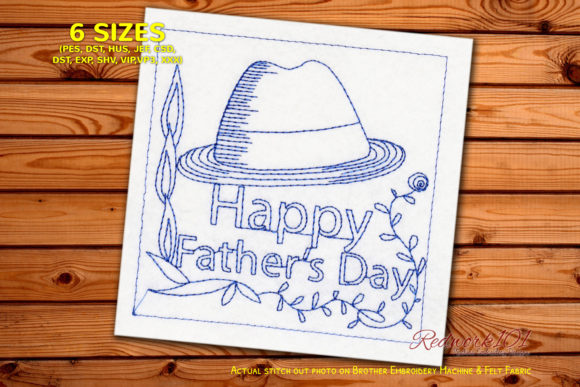
Fathers Day Hat Redwork lands with warm, grounded energy—think farmhouse meets heartfelt. The “redwork” cue immediately signals tradition, hand-stitched authenticity, and quiet confidence—not flashy, not fussy, but deeply intentional. It’s not cartoonish or overly clever; it’s sincere, slightly nostalgic, and visually legible at a glance. That matters immensely when your craft fair booth has 30 seconds to capture attention amid handmade soaps, ceramic mugs, and woven wall hangings. This design doesn’t shout—it invites. And for Father’s Day shoppers scanning for meaningful, non-generic gifts, that invitation is magnetic.
Where It Shines: Product-by-Product Realities
Fathers Day Hat Redwork thrives on items where simplicity reads as quality—and where red thread pops with intention:
- Tote bags: Centered above the pocket or scaled mid-panel, it reads cleanly even from six feet away. The redwork style avoids visual clutter, letting the message land without competing with bag texture or print.
- Aprons: Perfectly balanced on the bib or lower left corner—especially on natural linen or unbleached cotton. The minimal line work holds up beautifully through repeated washing and wear.
- Tea towels: A standout. Red thread on cream or oatmeal linen creates instant heirloom appeal. No need for dense fills—just clean outlines and subtle detail make it giftable, Instagrammable, and shelf-ready.
- Embroidered patches: Highly recommended. Fathers Day Hat Redwork scales down gracefully. At 2.5–3 inches wide, it retains charm and clarity—ideal for iron-on or sew-on use on dad’s favorite cap, jacket, or lunchbox.
- Caps & curved surfaces: Proceed with care. The Box Stitch mentioned in the description is optional—but if included, test it on a curved cap crown first. Redwork’s open lines adapt better than dense satin stitches, but tight curves can distort fine details. Stick to front panels or flat bill areas for best results.
- Pillow covers & fabric pouches: Excellent focal point. On linen-cotton blends or textured canvas, the redwork gains tactile warmth. Avoid ultra-heavy fabrics unless you reinforce with cutaway stabilizer—the design relies on crisp line definition, not coverage.
What Makes It Sell—And What Might Slow You Down
Fathers Day Hat Redwork wins because it’s instantly understandable, emotionally resonant, and production-friendly. Shoppers don’t pause to decode it—they recognize “Dad,” “hat,” and “handmade” in under two seconds. That speed-to-recognition is gold at craft fairs, where hesitation means lost sales.
It photographs exceptionally well: red thread against light natural fabrics delivers rich contrast and depth without editing. For Etsy sellers, that means fewer retakes, faster listing turnarounds, and higher click-through on thumbnails. As a digital embroidery file, it’s highly repeatable across batch production—no complex color changes, no tiny lettering that blurs at small scale, no overlapping elements that snag needles.
But caution points remain. If your version includes the optional Box Stitch, inspect its density. Heavy outlining around the outer box can increase stitch count significantly—and on textured towels or thick canvas, that may cause puckering or stiffness. Also, avoid placing Fathers Day Hat Redwork too close to seams or hems on aprons or pouches; redwork’s delicate lines lose impact when compressed or folded.
Design Notes Every Embroidery Business Owner Should Run Before Booth Day
This isn’t just about stitching—it’s about protecting your reputation, your time, and your margins. Here’s what I do before cutting a single piece of fabric:
- Test on scrap fabric—same weight and weave as your final product. Does the red thread bleed on tea towels? Does the design shift on stretchy tote webbing?
- Check thread contrast on dark fabric. Redwork assumes light-to-mid background tones. On navy or charcoal, switch to ecru or mustard thread—or skip the design entirely unless you’ve verified visibility.
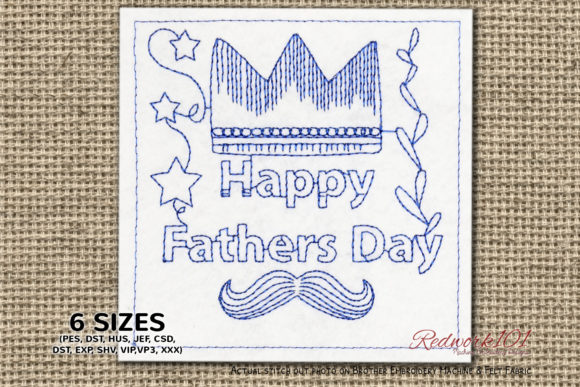
- Review spacing and proportions in your embroidery software. Is the hat shape balanced? Does “Fathers Day” sit comfortably within the composition—or does it feel cramped next to the graphic element?
- Confirm hoop size compatibility. If your machine uses smaller hoops (e.g., 4x4), ensure Fathers Day Hat Redwork fits without awkward cropping—or plan to split and re-register (not ideal for weekend production).
- Inspect stitch density, especially near curves and corners. Over-stitched areas trap moisture, stiffen fabric, and frustrate customers who expect softness in handmade goods.
- Use the right stabilizer. Tear-away works for smooth cottons; cutaway is essential for knits, terrycloth, or anything with loft. Skipping this step turns a premium handmade product into a puckered disappointment.
- Create at least one real mockup—not just a printable mockup. See how it drapes on an apron, how it feels in hand on a tea towel, how it holds up under booth lighting.
- Compare fabric colors side-by-side. Cream, oat, natural, and ivory all behave differently with red thread. One shade may glow; another may mute.
- Confirm commercial licensing. Fathers Day Hat Redwork must be cleared for resale as a finished product—not just for personal use. If license terms are unclear, contact the designer or source before investing in materials.
Final Thought: A Quiet Anchor in Your Father S Day Lineup
Fathers Day Hat Redwork won’t dominate your display like a neon sign—but it will anchor your booth with sincerity and craftsmanship. It draws the thoughtful shopper, the gift-giver who values story over sparkle, the Etsy buyer searching for something that feels *made*, not mass-produced. When paired with well-chosen fabrics, smart placement, and consistent branding, it elevates your entire handmade product range. In a sea of generic “Best Dad Ever” slogans, Fathers Day Hat Redwork stands out by saying less—and meaning more.