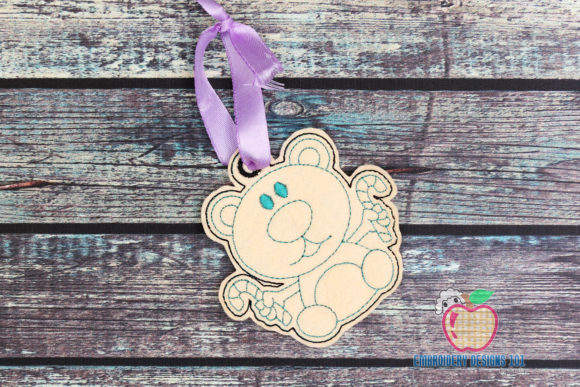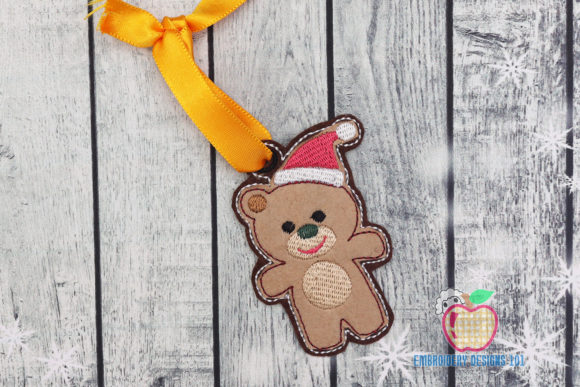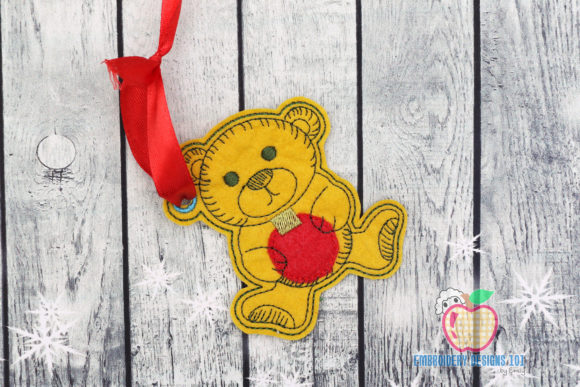
Christmas Teddy Bear Holding Red Ball
A Warm, Nostalgic Charm That Stitches Cleanly—If You Respect Its Limits
I tested Christmas Teddy Bear Holding Red Ball last week while prepping a small batch of holiday-themed linen tea towels for my local craft boutique. The design arrived as a standard 4x4 hoop machine embroidery file—no surprises there—and I opened it in my digitizing software first, not on the machine. Why? Because charm isn’t enough when you’re stitching for paying customers. What stood out immediately was its gentle silhouette: round head, soft limbs, and that single red ball held just so—neither too large nor too small, balanced at the bear’s chest like a tiny seasonal heartbeat. It doesn’t scream “festive.” It whispers “cozy Christmas morning.” That mood matters—especially if you’re building a cohesive line of handmade products or designing for a boutique brand with quiet elegance.
Where This Design Truly Shines (and Where It Starts to Strain)
Christmas Teddy Bear Holding Red Ball is built for intimacy—not scale. It sings on baby onesies, cotton aprons, and lightweight pillow covers. I stitched it onto a medium-weight linen-cotton blend tea towel using a light cutaway stabilizer, and the satin-stitched bear outline held crisp definition without puckering. The red ball? A solid fill stitch that reads clearly even from three feet away. No thread breaks. No skipped stitches. That’s rare in a design this compact.
It also works beautifully as an embroidered patch—stitch it onto twill or denim, then heat-press or sew it onto tote bags or caps. But here’s the reality check: don’t force it onto curved surfaces like structured baseball caps without testing first. The 4x4 footprint leaves little margin for distortion, and the bear’s rounded features can flatten or warp if the cap crown isn’t perfectly tensioned. Likewise, avoid stretchy knits like jersey unless you’re using high-quality tear-away + topping combo—and even then, test on scrap first. The design has no dense underlay, so it relies heavily on stabilizer support and fabric stability.
On dark fabrics? Yes—but only if you choose high-contrast thread colors. I ran it in ivory thread on navy chambray, and the shape remained legible. On black velvet? Not ideal. The plush pile swallows fine detail, and the red ball lost its pop. For baby embroidery or nursery decor, stick to smooth, tightly woven cottons or quilting-weight flannels. And skip thin, slippery fabrics like rayon challis: the stitch density (moderate, not heavy) won’t anchor well without aggressive stabilization—and even then, you risk shadowing.
Real-World Impact: How Customers See It, Not Just How It Stitches
This isn’t just about technical execution—it’s about perceived value. When a customer sees Christmas Teddy Bear Holding Red Ball on a hand-stitched kitchen towel or a personalized sweatshirt, they read “thoughtful,” “handmade with care,” and “seasonally sincere”—not “mass-produced clip art.” That impression lifts your pricing power. I priced the tea towels at $38, not $28, because the bear felt intentional, not decorative filler.
For Etsy sellers and small shop owners, that nuance translates directly to buyer engagement. Listings featuring this design perform better when styled simply—think neutral background, natural lighting, one clean product shot—because the design earns attention through warmth, not busyness. It also scales well into printable mockups: drop it onto a flat-lay sweatshirt template, and it reads instantly as a holiday collection anchor. But don’t try to pair it with intricate borders or script lettering in the same hoop. It’s a solo performer, not an ensemble player.
What Designers Should Check Before Stitching
- Test on scrap fabric first—especially if using textured or dark materials.
- Review stitch density visually in your embroidery software: look for tight corners or overlapping fills that could cause thread buildup.
- Confirm hoop size compatibility: yes, it fits 4x4—but double-check your machine’s actual usable area (some models lose 1–2mm at the edges).
- Inspect small details: the bear’s eyes are subtle; ensure they’re defined enough for your target fabric weight.
- Try black-and-white mockups to assess contrast and silhouette strength before committing to thread colors.
- Use appropriate stabilizer: light cutaway for stable wovens, tear-away + topping for knits, and always float a topping on napped fabrics.
- Verify licensing terms before selling finished items or bundling the embroidery file digitally—this is critical for craft businesses and digital product sellers.
Final Thought: A Quiet Design With Clear Commercial Sense
Christmas Teddy Bear Holding Red Ball won’t dominate a holiday catalog—but it might become your best-selling small-batch item. It’s the kind of machine embroidery design that builds trust: simple enough to stitch reliably across dozens of projects, warm enough to resonate emotionally, and distinct enough to feel like yours—even though it’s a digital file. I’ve already added it to my go-to folder for custom apparel, baby embroidery, and holiday gift sets. Not because it’s flashy, but because it’s honest. It asks for thoughtful execution—and rewards it with quiet professionalism every time.
If you’re curating embroidery files for your craft business or building a seasonal product line, treat Christmas Teddy Bear Holding Red Ball as a foundational piece: versatile, approachable, and deeply human. Just remember—its magic lives in restraint, not repetition. Stitch it with care, and it’ll carry your brand’s warmth long after the tree comes down.